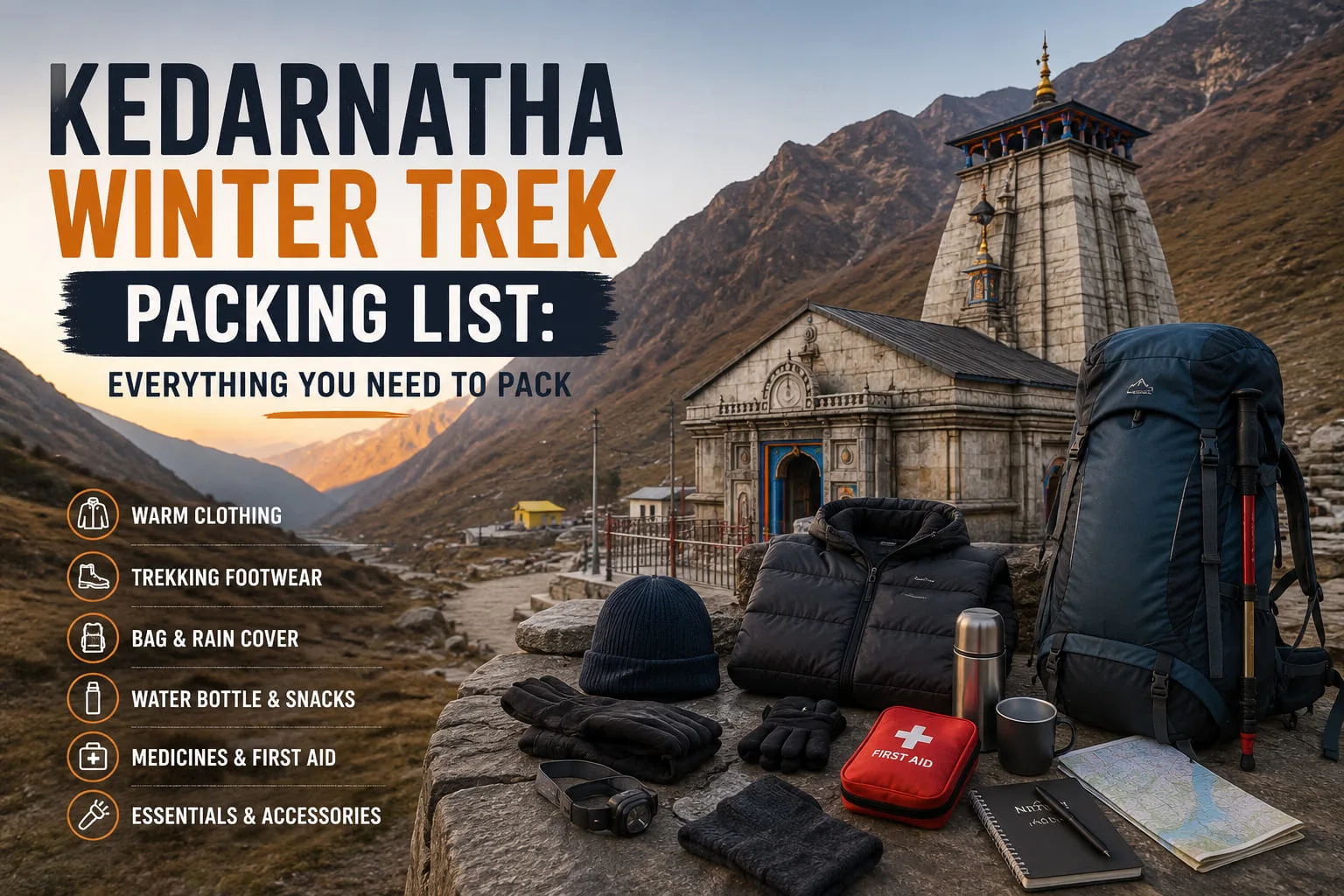
Kedarnath Winter Trek Packing List: Everything You Need to Pack
There is a distinct moment on the trail to Kedarnath where the dense pine forests of Govind Pashu Vihar National Park suddenly break open, revealing a pristine, blindingly white world.
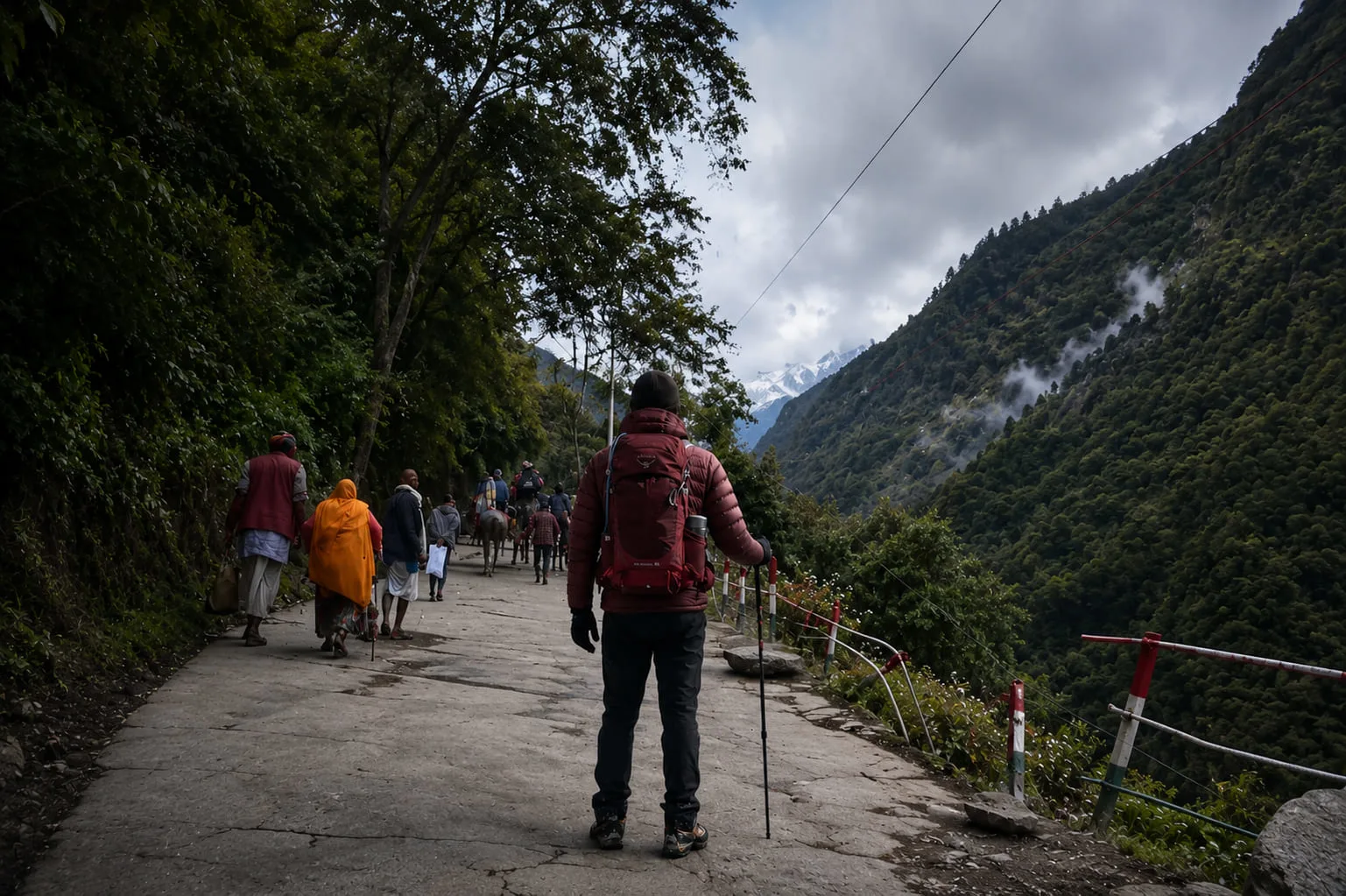
At 12,500 feet, the Kedarnath summit stands as one of the most breathtaking winter spectacles in the Indian Himalayas. But the very snowscapes that make this trek a bucket-list adventure also make it an unforgiving environment.
“When I first stood at the edge of that clearing, looking up at the summit ridge wrapped in winter white, I finally understood the hype. It is undeniably magical. But the mountains have a way of humbling you quickly if you aren’t prepared.”
As night falls over the Juda Ka Talab or Kedarnath Base campsites, the thermometer routinely plummets past the freezing mark, often bottoming out at a bone-chilling 10 degrees Celsius.
🗺️ Going Offline? Once you pass Sankri village, you will lose all mobile network coverage and internet access. Don’t get stuck without a route reference. Download our colorful, mobile-friendly Sankri to Kedarkantha Trail Map & Itinerary Guide PDF to your phone right now so you can check campsite elevations, trail distances, and nightly temperatures while completely offline.
In conditions this extreme, poor gear choices aren’t just uncomfortable—they can cut your trek short. Packing for a winter trek isn’t about throwing your heaviest winter sweaters into a suitcase; it is an exercise in strategic planning. This comprehensive Kedarnath winter trek packing list breaks down the exact gear, apparel, and trail logistics you need to successfully conquer the snow without breaking your back.
The Core Rule of Mountain Survival: Master the 3-Layer System
If you take only one piece of advice away from this guide, let it be this: ditch the cotton. Whether it is your favorite cotton t-shirt, heavy denim jeans, or thick casual hoodies, cotton is the ultimate enemy on a winter trail. Cotton traps sweat against your skin. When you stop moving to take a break, that trapped moisture rapidly cools, dropping your core body temperature and setting a direct path toward hypothermia.
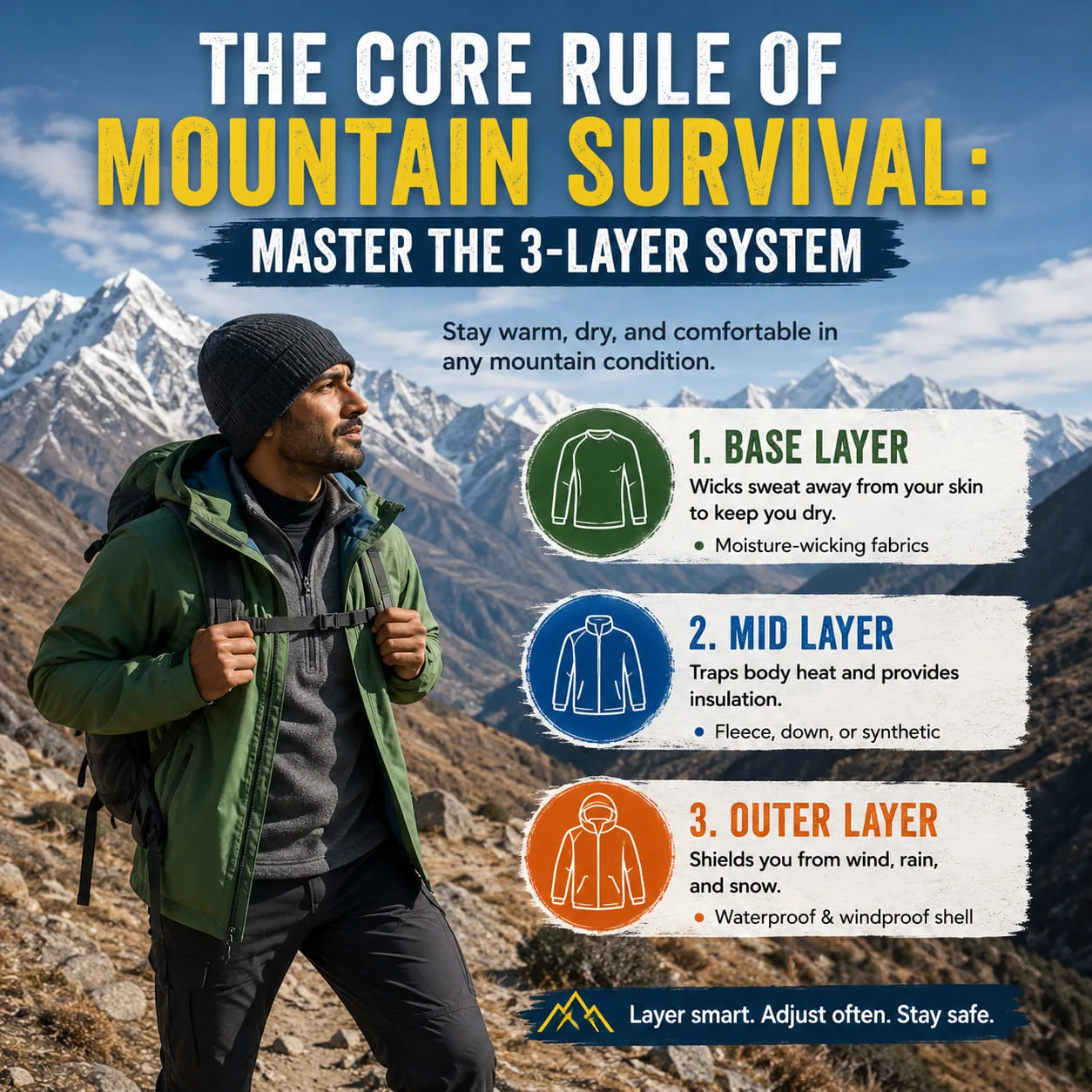
To stay warm, dry, and safe, outdoor professionals rely strictly on a technical three-layer clothing system. Each layer has one specific job, working together to create a personal micro-climate.
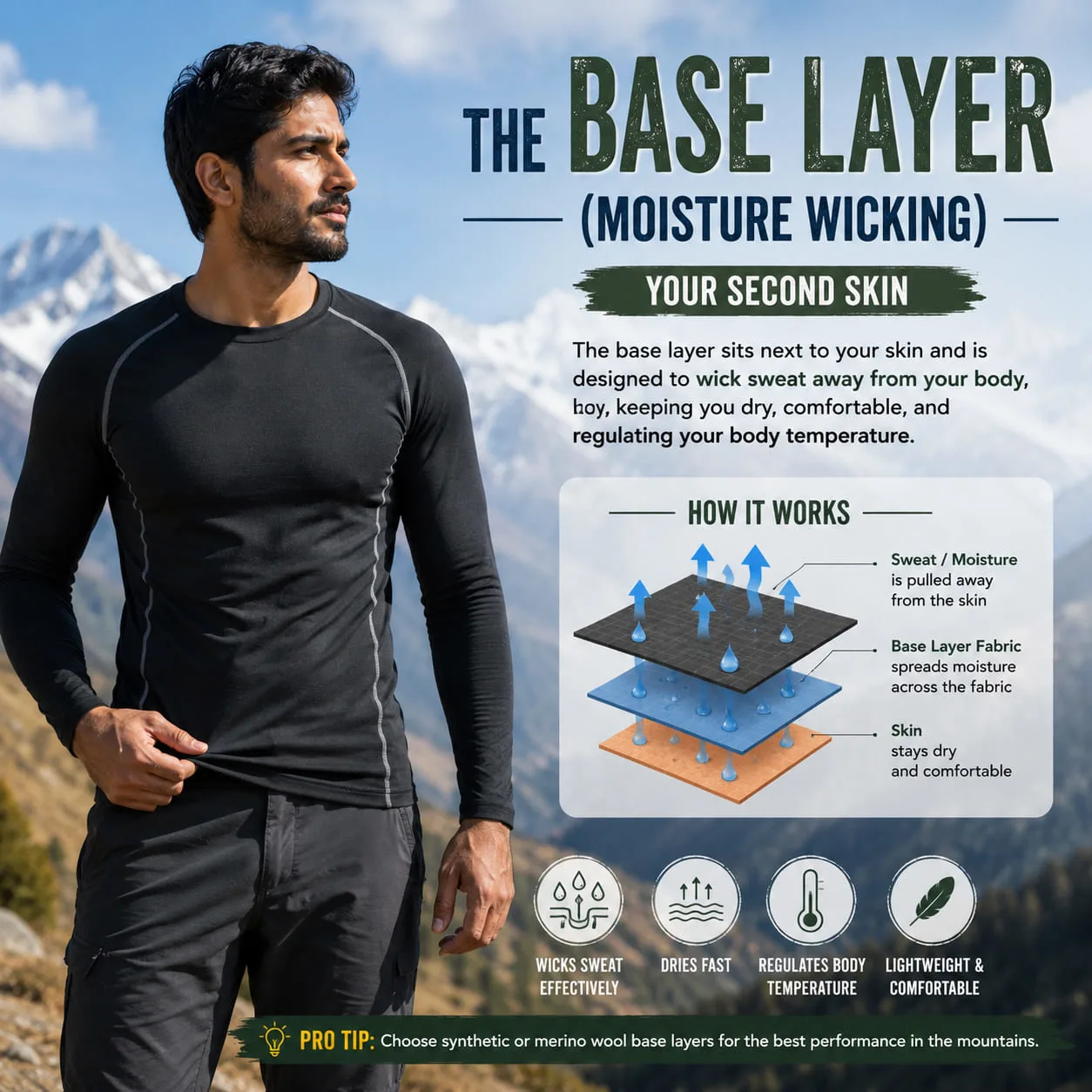
1. The Base Layer (Moisture Wicking)
The base layer sits directly against your skin. Its sole purpose is to manage moisture by pulling sweat away from your body as you hike uphill.
- What to look for: Look for snug-fitting, high-quality synthetic thermals (polyester or nylon blends) or premium Merino wool.
- The Strategy: You will need at least two pairs of thermal tops and bottoms for a standard kedarnath itinerary—one clean, dry pair kept strictly for sleeping in your tent, and one pair worn while actively trekking.
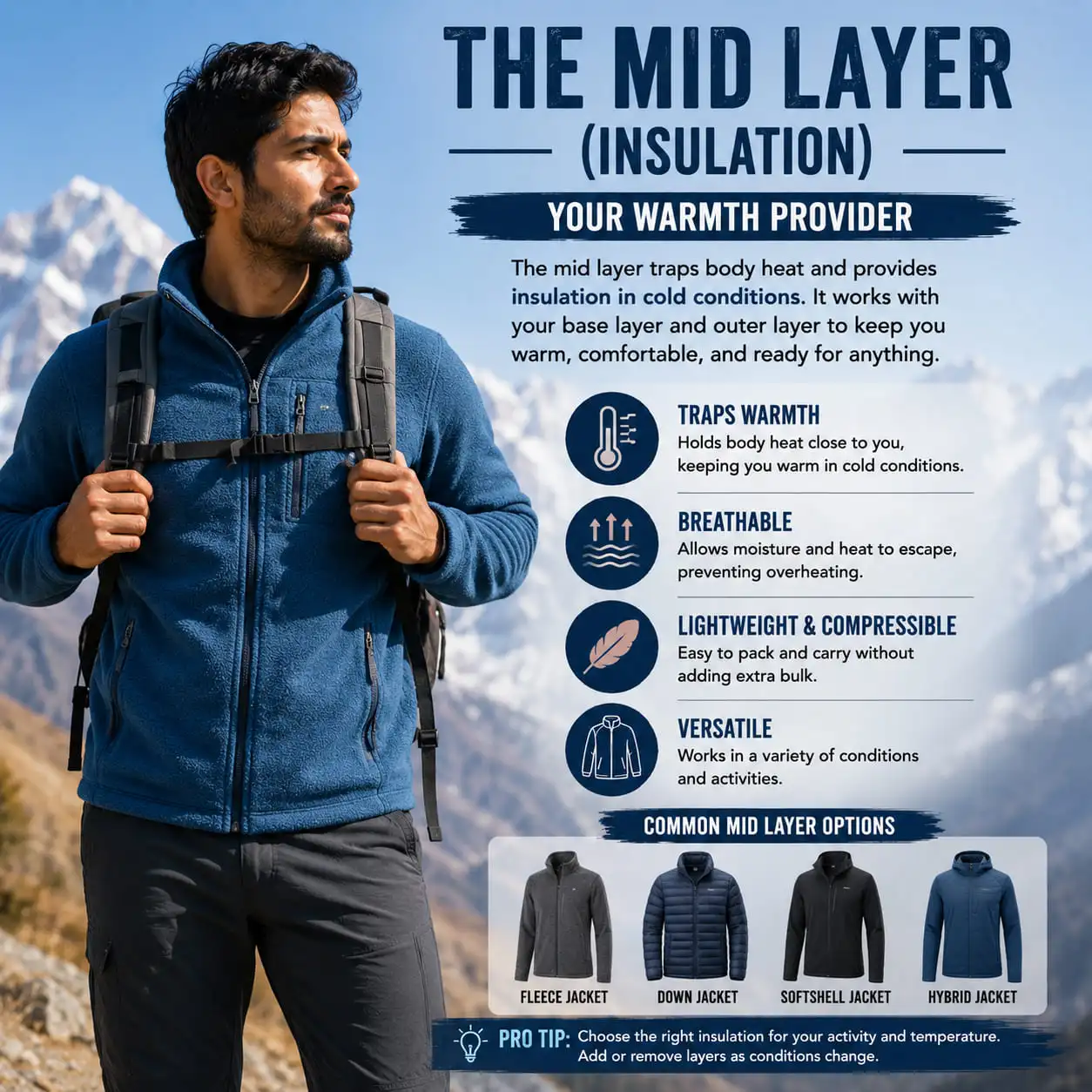
2. The Mid Layer (Insulation)
Once your base layer handles the moisture, your mid layer takes over to trap the ambient heat your body naturally generates. This layer acts as a barrier against the cold air trying to seep in.
- What to look for: A midweight fleece jacket (ideally between 200 to 300 GSM) or a lightweight, packable down sweater jacket. Fleece is highly breathable, making it perfect to wear while moving on colder mornings.
- The Strategy: Having a zippered mid-layer allows you to easily vent heat if you start sweating during steep climbs.
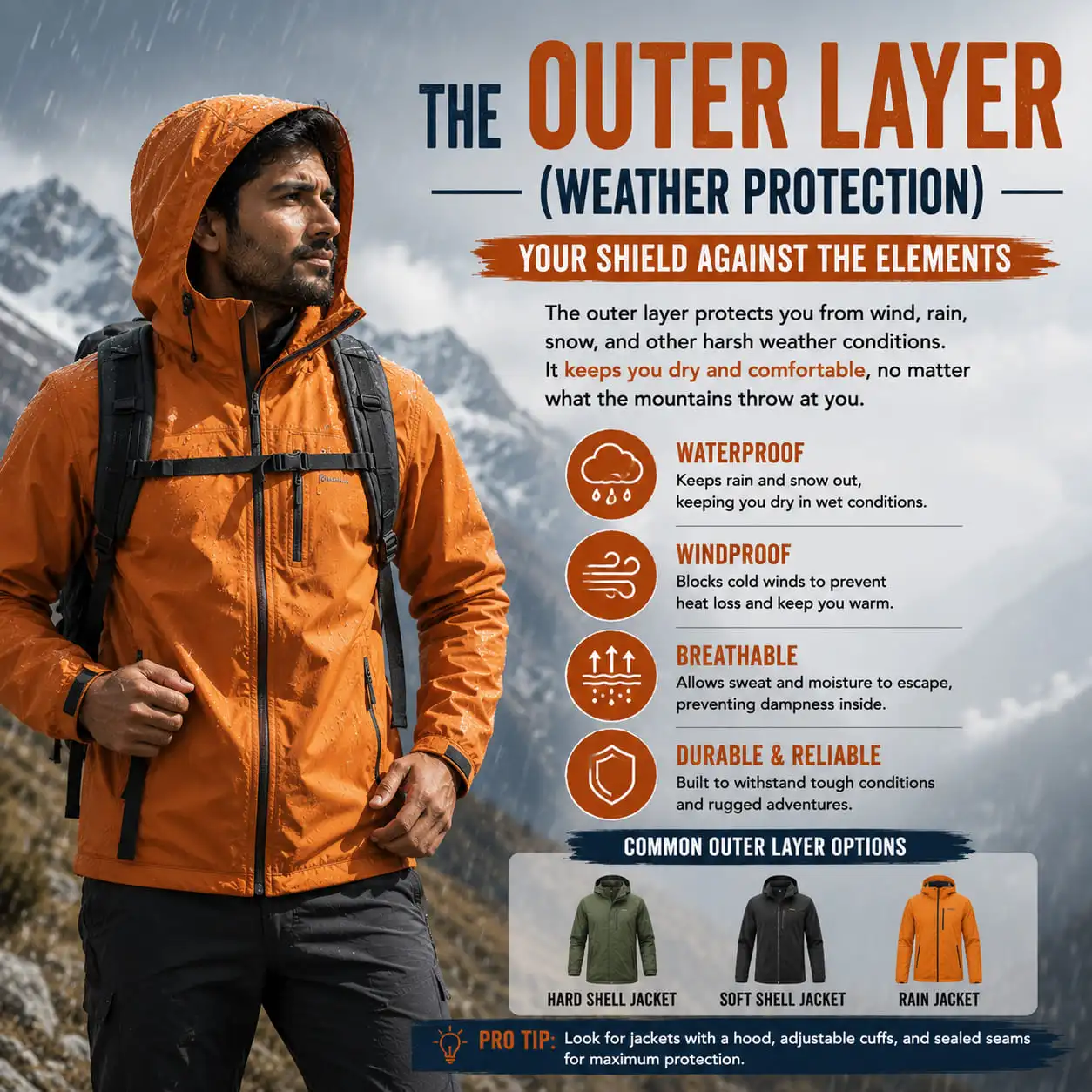
3. The Outer Layer (Weather Protection)
The outer layer—often called the shell—is your shield against external elements like biting Himalayan winds, falling snow, and unexpected sleet.
- What to look for: You need a heavy-duty, windproof, and water-resistant down jacket rated for sub-zero temperatures. It should feature a deep, insulated hood and a robust outer shell material.
- The Strategy: You won’t actually wear this heavy layer while hiking up steep ridges, as you’ll overheat quickly. Instead, keep this jacket right at the top of your pack so you can whip it out the second you arrive at a freezing campsite or when you begin the midnight summit push.
My personal checklist tip: When I packed for my first winter trek, I made the mistake of buying a cheap, heavy fashion puffer jacket thinking it would suffice. It didn’t. Within an hour of the evening wind picking up at base camp, the cold cut right through it. Do not skimp on a technical, wind-resistant down jacket—it is your ultimate safety shield when the sun goes down.
The 30L Daypack Strategy: Why Less is More with Mule Offloading
If you are trekking kedarnath with a guided group, you will likely have the option to offload your primary luggage—your massive 50L to 60L rucksack or duffel bag—onto mules or porters. This is an incredible logistical luxury that saves your knees and lower back from carrying 15 kilograms of dead weight up steep, snowy inclines.
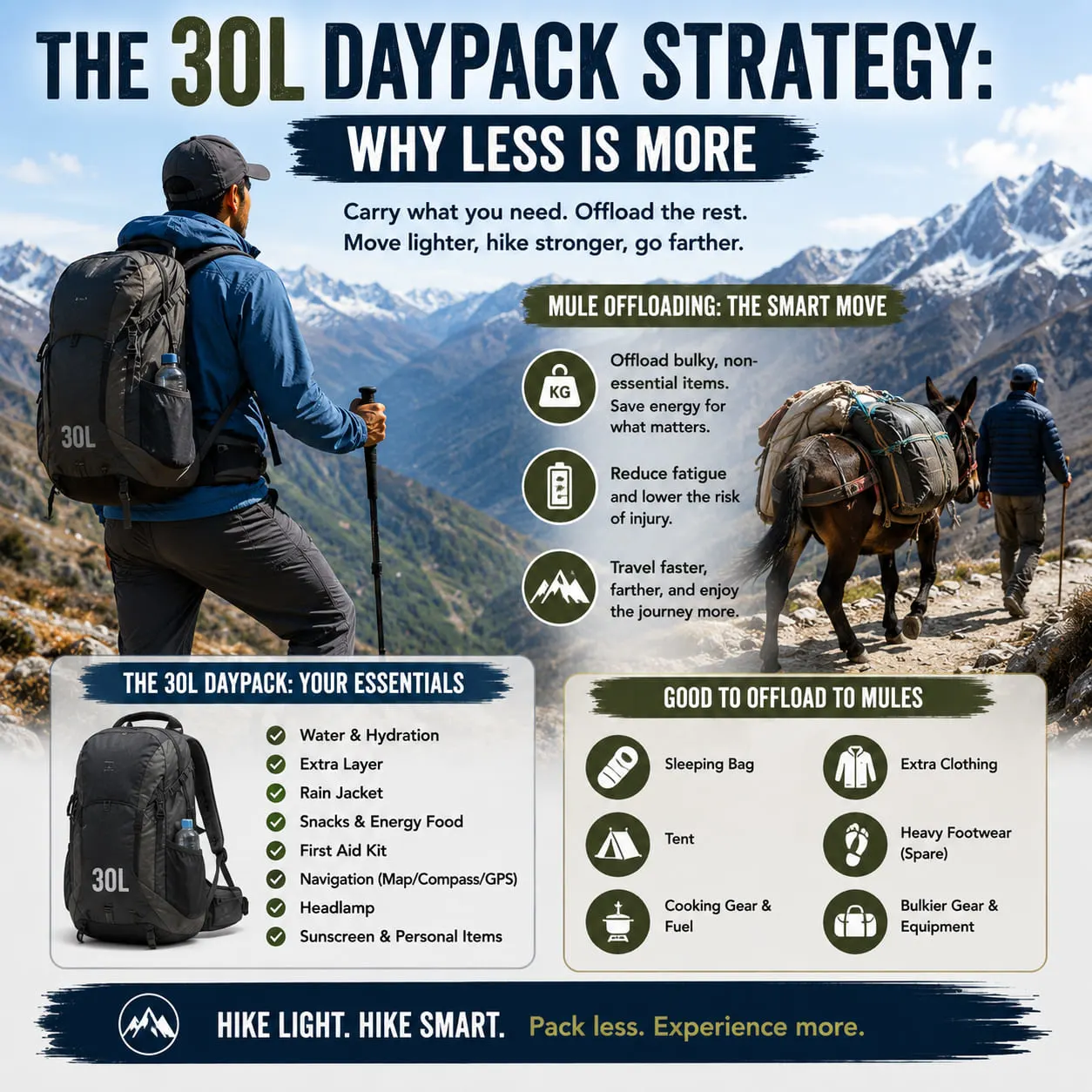
However, many first-time trekkers misunderstand how this system works, leading to a dangerous mistake on the trail: Once the mules are loaded up and leave the morning campsite, they move much faster than you do. You will not see your main luggage again until you reach the next camp late in the afternoon.
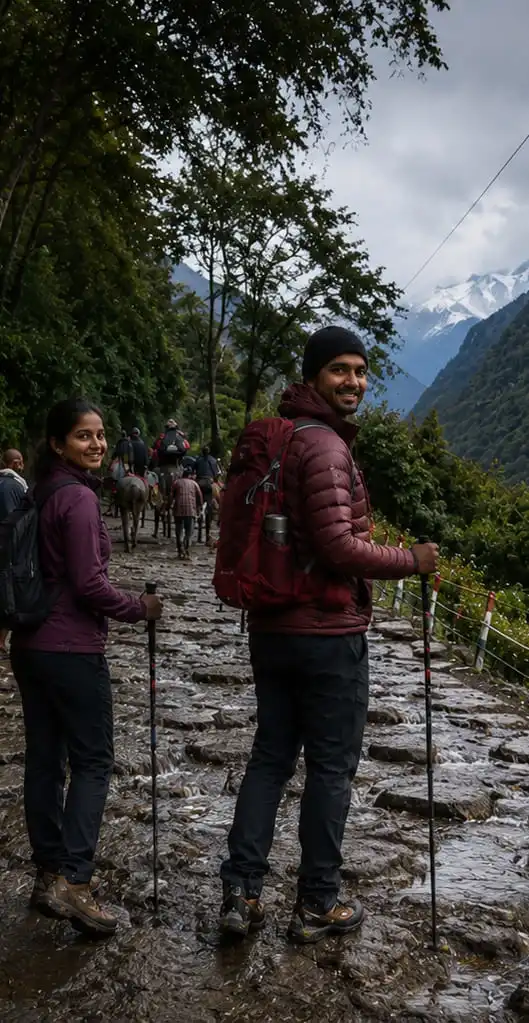
“I’ve watched unprepared trekkers learn this lesson the hard way. They left their fleece layers in their main duffel bags on the mules, only for a sudden mist to roll in at noon. They spent the next three hours shivering on the trail. Trust me, keep your insulation layers inside your daypack, not on a mule’s back.”
The mountain environment is highly dynamic. A clear blue sky at 9:00 AM can easily turn into a biting, wind-driven snowstorm by noon. If you get cold, wet, or hungry on the ridge, you cannot ask a mule to turn around. This is exactly why a 30-liter daypack is the ultimate sweet spot for the kedarnath winter trek. It is small enough to keep you light on your feet, yet spacious enough to function as your mobile survival capsule.
What Needs to Stay on Your Back on the Trail
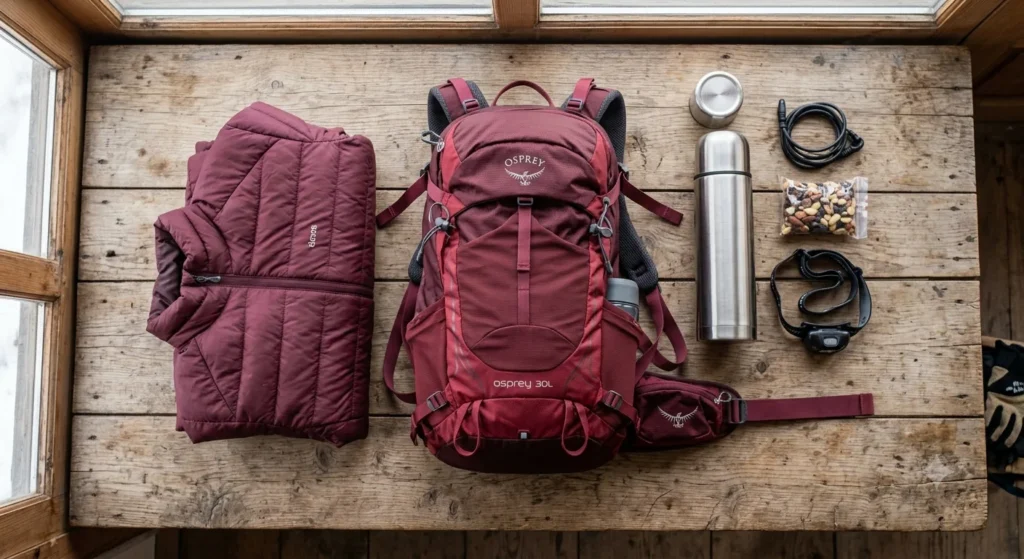
Your 30L daypack should strictly contain items that keep you safe, warm, and hydrated between camps. Here is the exact breakdown of what stays with you at all times:
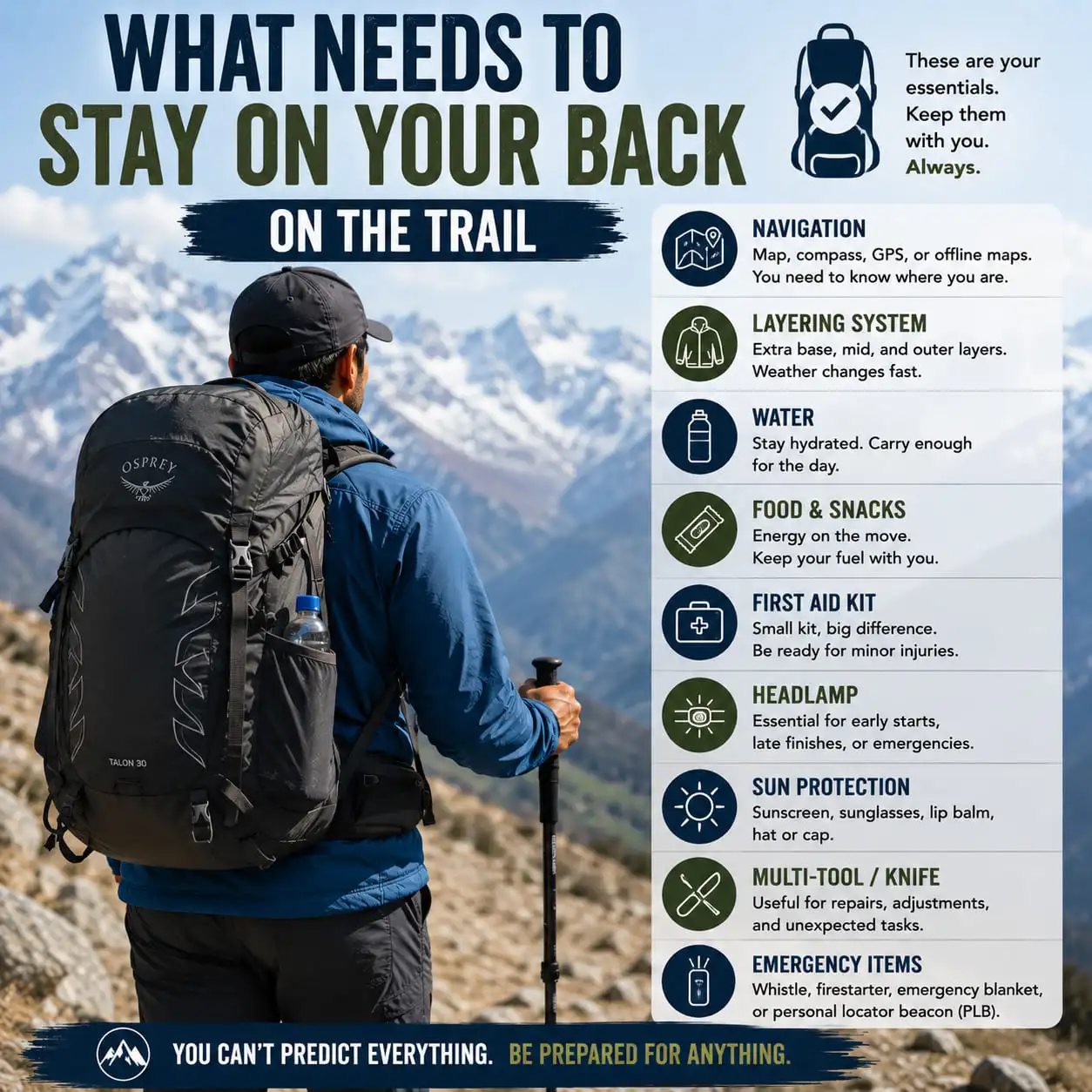
- The “Shedded” Layers: When you begin trekking in the early morning freeze, you will likely be wearing your heavy outer down jacket. Within 30 minutes of uphill climbing, your body will heat up, and you’ll need to strip down to your fleece or thermal layer. Your 30L daypack provides the exact volume needed to swallow a bulky down jacket without bursting its zippers.
- Hydration (Your Insulated Thermos): In sub-zero temperatures, standard plastic water bottles will literally freeze into blocks of ice. You must carry a 1-liter insulated steel flask filled with warm water inside your daypack.
- The Emergency Elements: A windproof rain poncho (crucial if snow turns to wet sleet), a personal medical kit, a headlamp (non-negotiable for the 3:00 AM summit push), and high-calorie trail snacks like dark chocolate, nuts, and energy bars.
- Extremity Protection: Your UV-protected sunglasses to prevent snow blindness, and your heavy waterproof ski gloves. You will likely wear thin fleece liners while moving, but the heavy gloves need to be instantly accessible the moment you stop for a break, and your hands begin to freeze.
The Danger of Oversizing (or Under sizing) Your Trail Pack
Some trekkers think, “If a 30L pack is good, a 15L running pack is lighter and better.” This is a trap. A 15L or 20L pack does not have the volume to hold a heavy winter down jacket alongside your water flask and snacks.
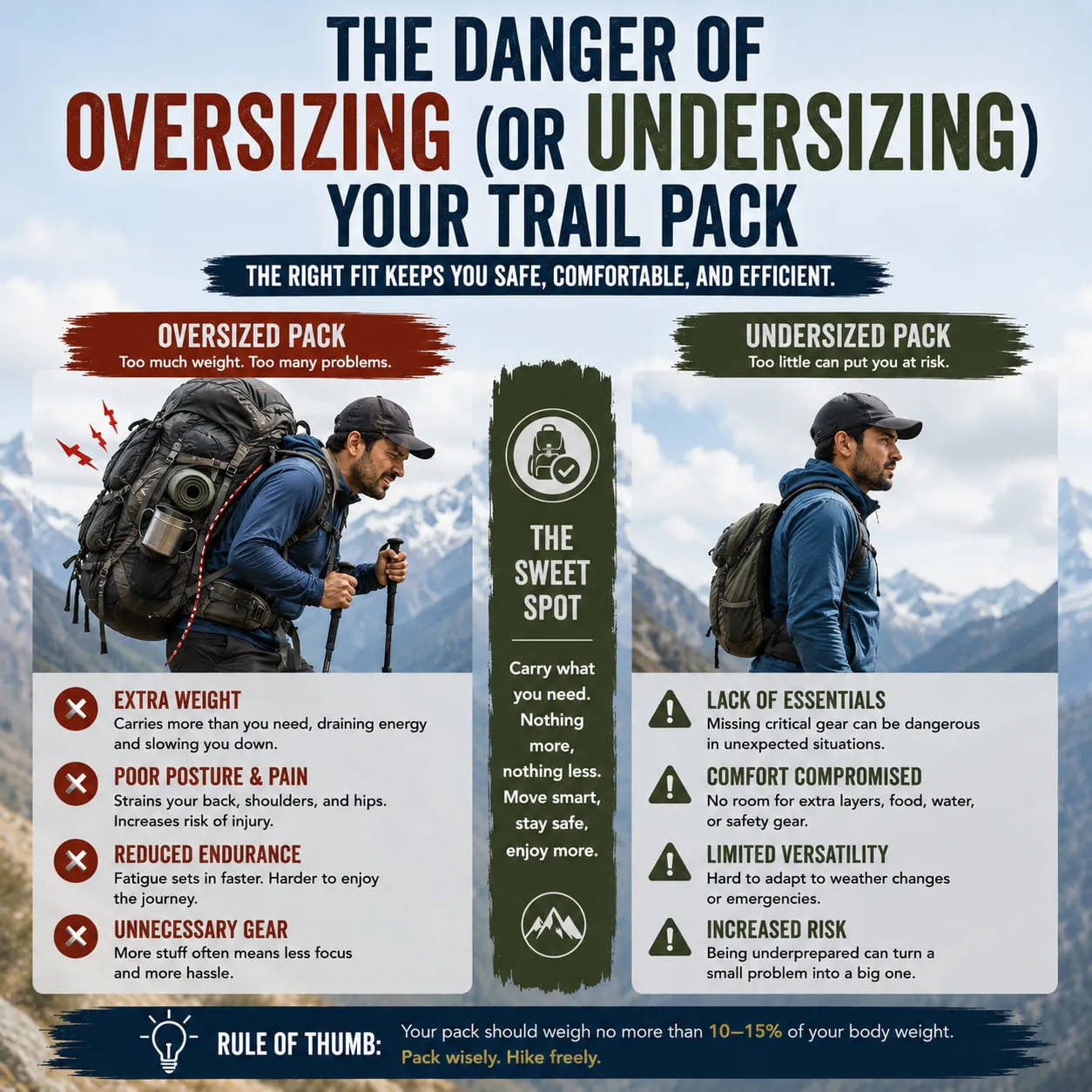
You will end up tying your expensive layers to the outside of the bag, where they can easily get snagged on tree branches, dropped on the trail, or soaked by falling snow.
Conversely, carrying a 45L or 50L pack “just in case” completely defeats the purpose of paying for mule offloading. A bulky pack adds unnecessary weight to your shoulders, saps your stamina on steep sections, and drastically throws off your center of balance when navigating narrow, icy patches where a single slip can be dangerous.
Pro Tip for the Trail: When shopping for a 30L daypack, prioritize one that features a thick, padded hip belt and a built-in rain cover. On steep winter ascents, transferring the weight of your water and gear from your shoulders down to your pelvis will save you an immense amount of energy over a four-hour climb.
Footwear and Extremities: Keeping Your Micro-Climates Warm
When trekkers struggle on the Kedarkantha trail, it is rarely because their core is cold—it is almost always because their fingers are numb, their toes are freezing, or their eyes are burning from the glare.
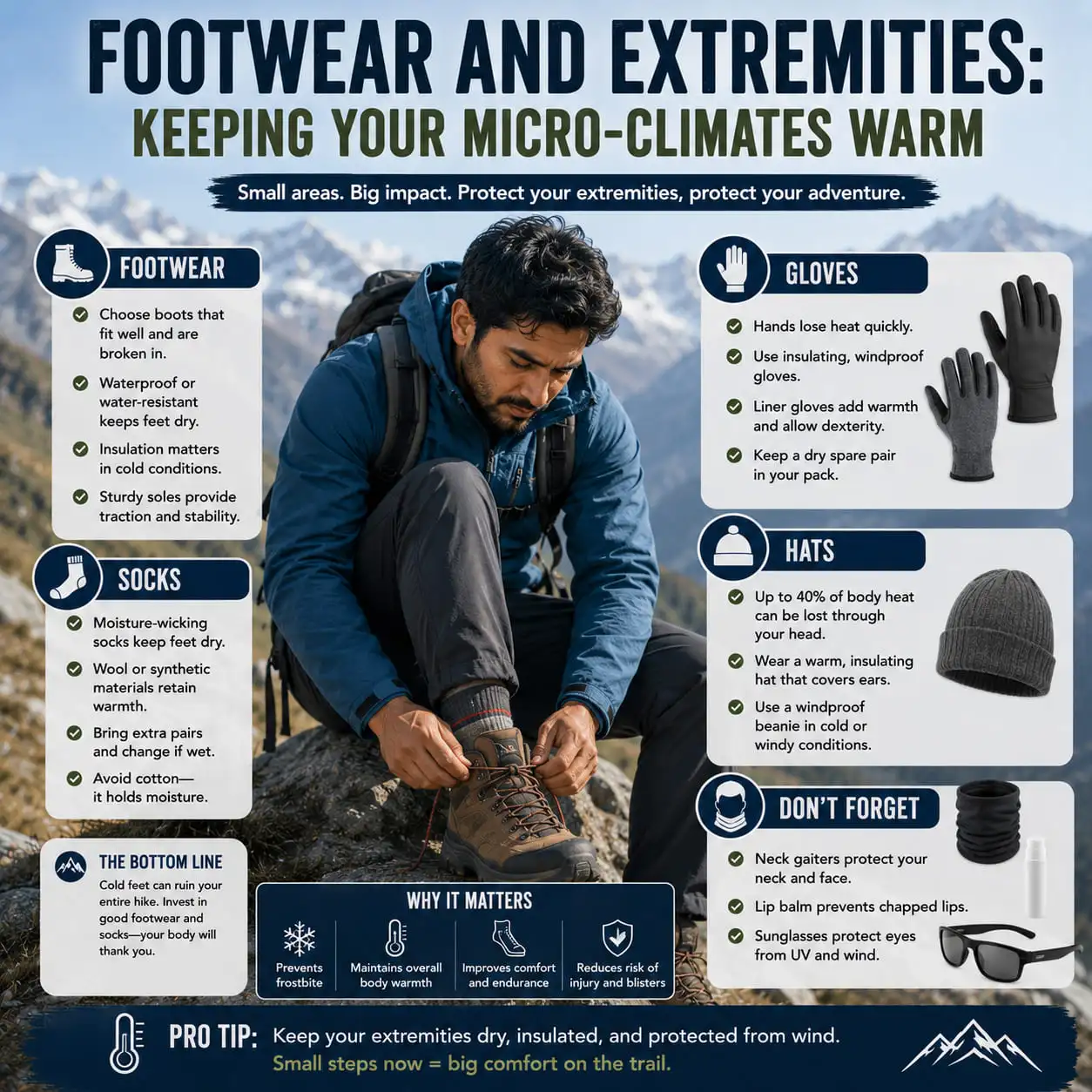
Your body is a biological furnace; when it senses extreme cold, it automatically pulls warm blood away from your hands and feet to protect your vital organs.
To prevent frostbite and maintain your footing on slick snow, you have to actively protect these vulnerable “micro-climates.”
Choosing the Right Winter Trekking Shoes
Your regular gym sneakers or running shoes are a recipe for disaster on a winter Himalayan trail. They lack the grip, water resistance, and structural support required for this terrain.
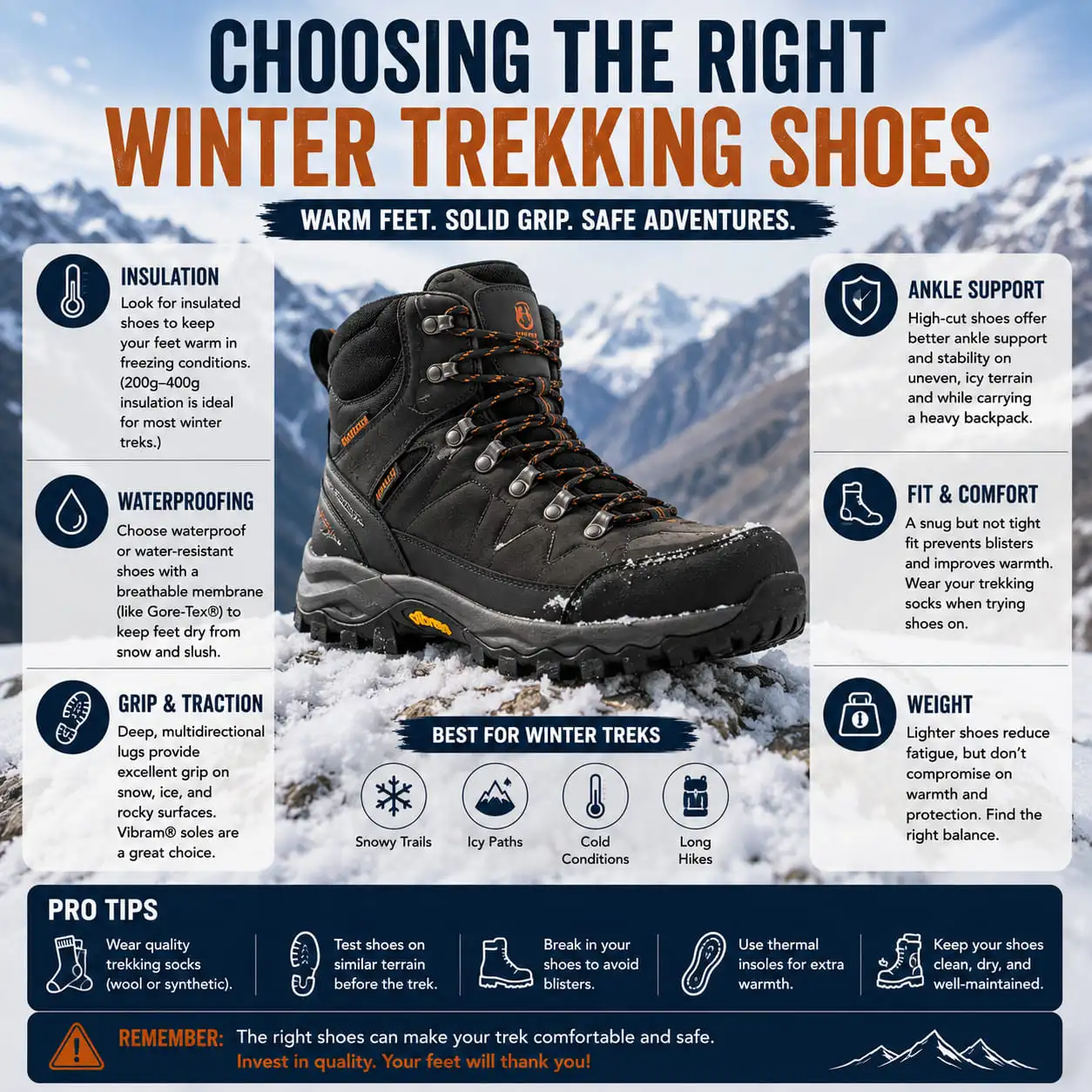
- Waterproofing is Mandatory: You will be walking through thick snow that melts slightly under the afternoon sun. If that moisture seeps through the mesh of your shoe, your feet will freeze instantly. Look for boots with a verified waterproof membrane (like Gore-Tex or equivalent tech).
- High Ankle Support: Navigating the uneven, rock-strewn snow paths up to the Kedarnath summit requires ankle stability. A high-ankle boot prevents painful twists and stops snow from spilling over the top into your shoe.
- Deep Lugs: Flip your shoes over—the rubber tread needs deep, aggressive grooves (lugs) to bite into hard-packed snow and mud.
- Crucial Rule: Never wear brand-new boots on the trek. Buy them at least a month in advance and break them in on local walks to avoid agonizing blisters on day one.
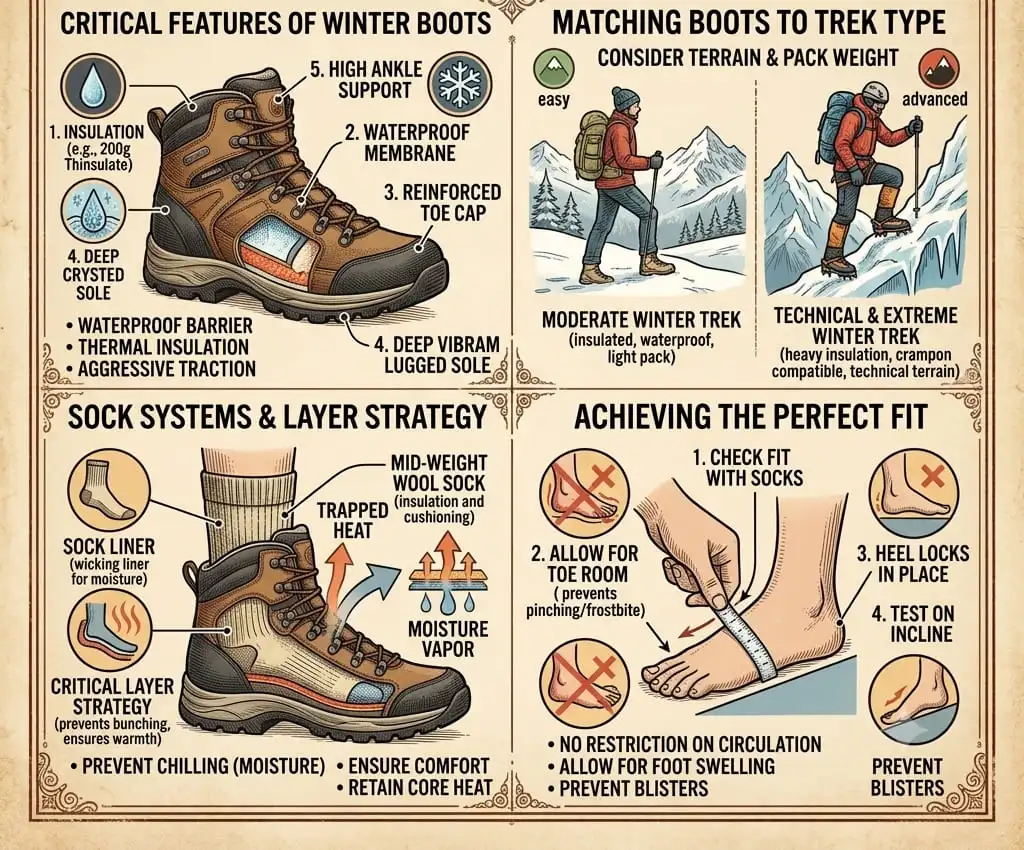
A quick reality check: I once met a hiker on the trail who wore brand-new boots straight out of the box. By day two, their heels were covered in raw blisters, turning a dream trek into an absolute agonizing struggle. Buy your boots at least three to four weeks before your trip, and wear them on your weekend walks or even around the house to soften up the heel cups.
The Double-Glove System
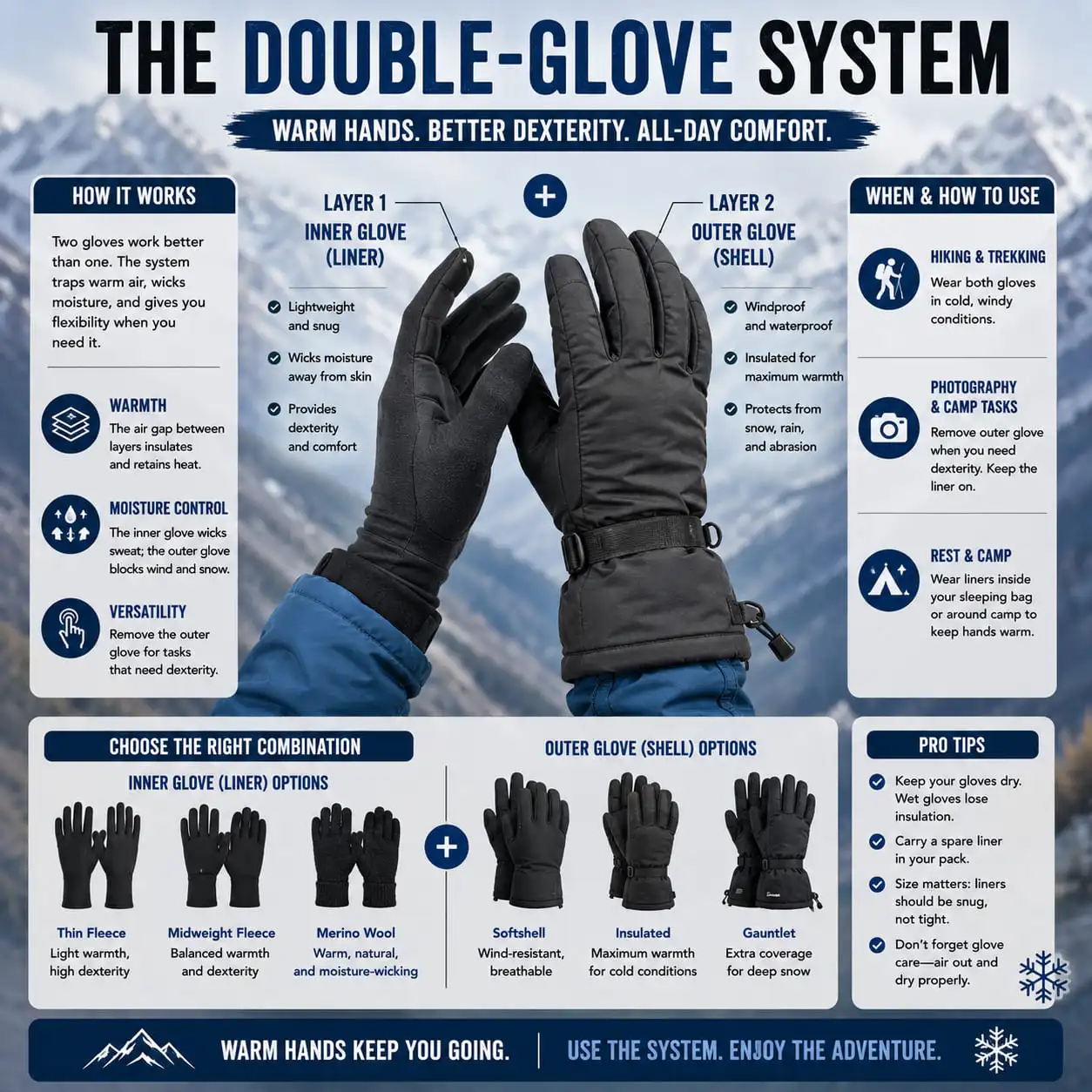
Just like your torso, your hands require a layering strategy. A single pair of wool mittens won’t cut it when you are gripping metal trekking poles all day.
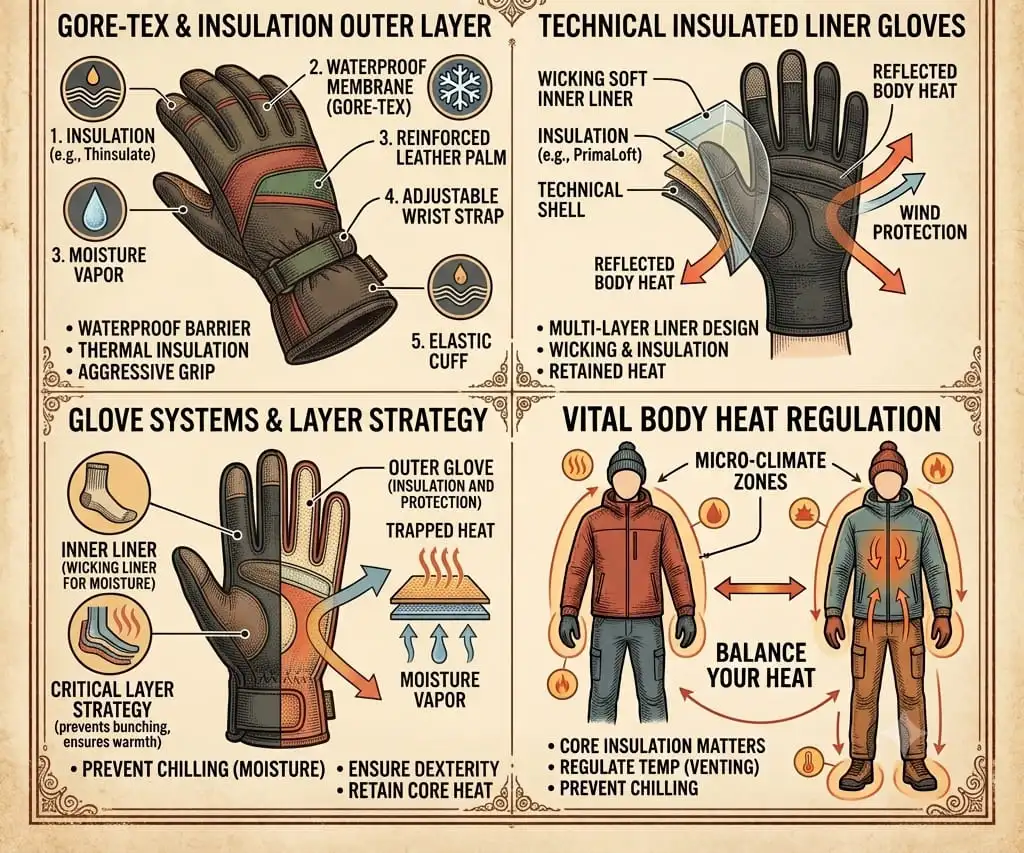
- The Liner Glove (Inner Layer): A thin, snug pair of fleece or synthetic gloves. These stay on almost permanently. They protect your bare skin from freezing air when you need to take off your outer gloves to tie your shoelaces, unzip your pack, or snap a photo.
- The Ski Glove (Outer Layer): A heavy, heavily insulated, windproof, and waterproof glove that fits comfortably over your liner. This is your shield against biting winds and wet snow.
Headgear & Eye Protection
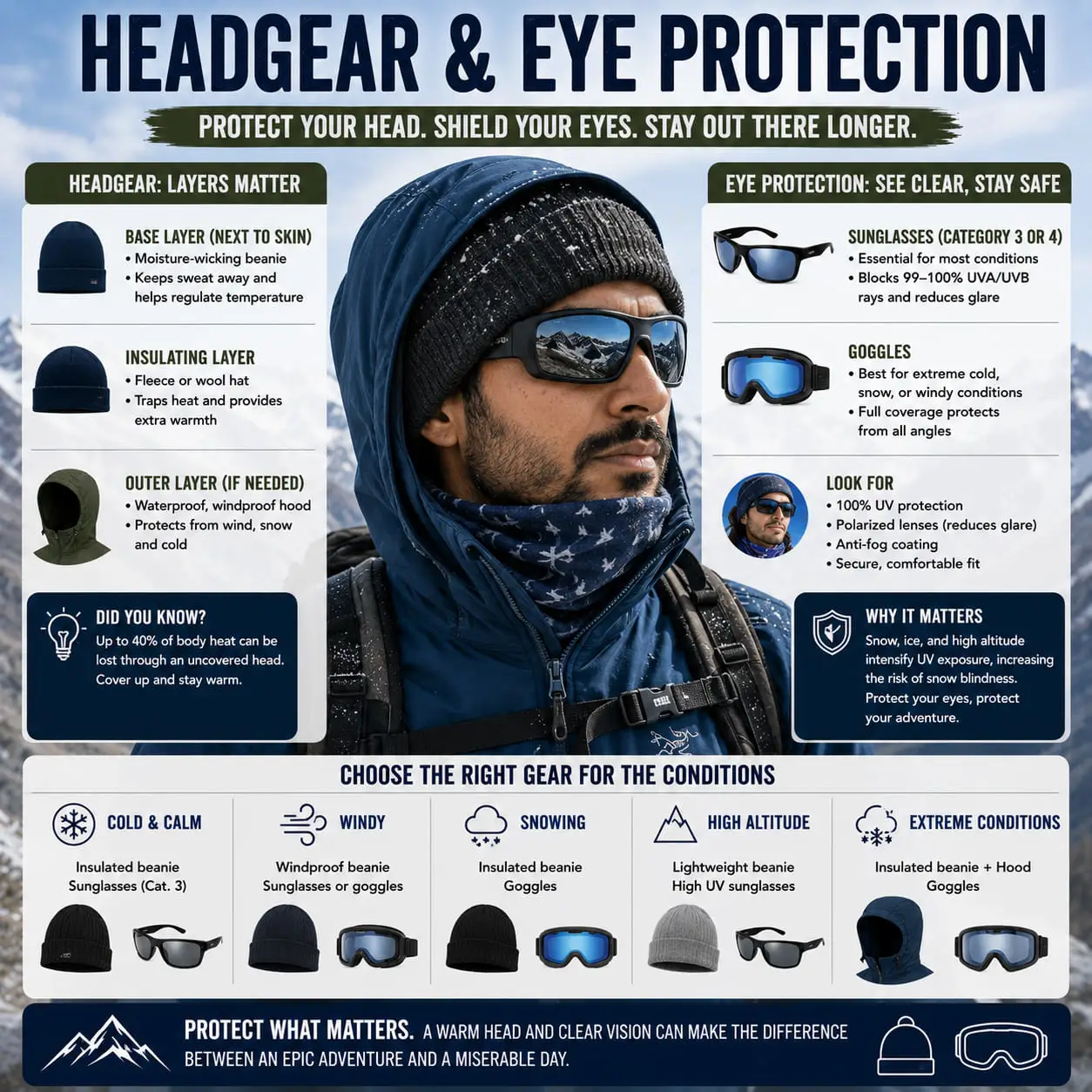
Your head and face lose heat rapidly, and exposure to cold mountain winds can trigger altitude headaches.
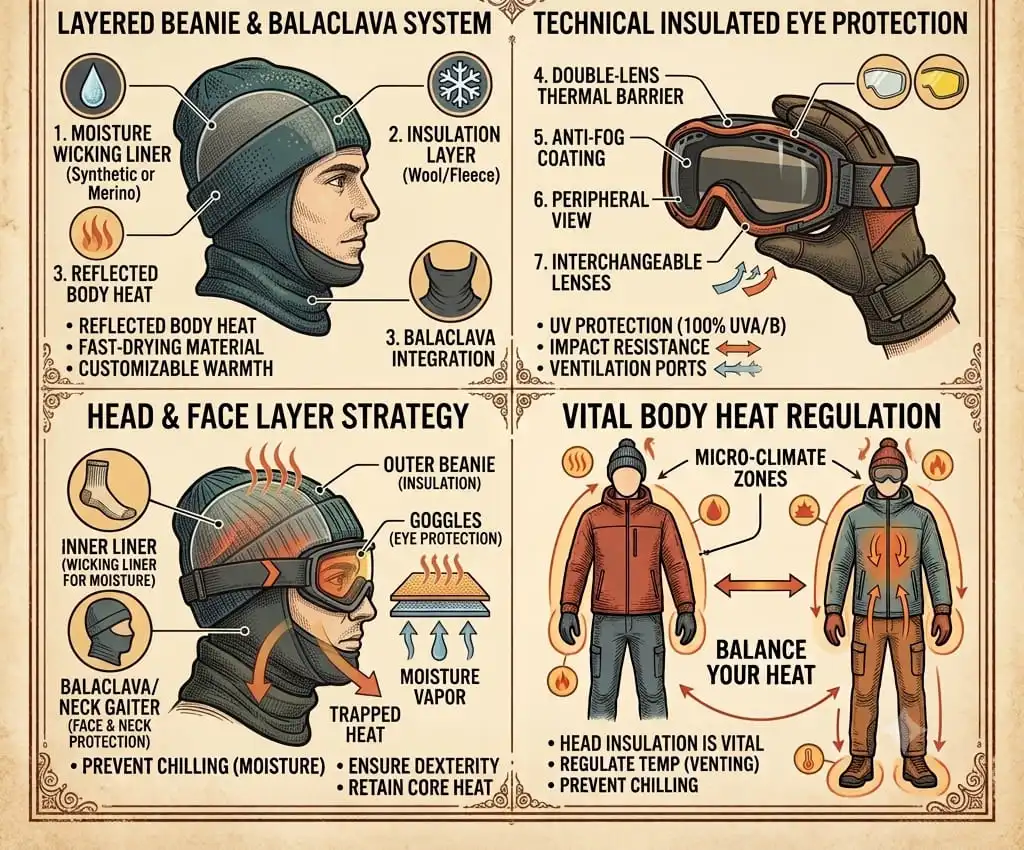
- The Fleece Balaclava or Beanie: Bring a high-quality woolen beanie that completely covers your ears. Better yet, pack a fleece balaclava that protects your neck, chin, and nose from windchill.
- Category 3 or 4 UV Sunglasses: This is non-negotiable. Snow acts like a massive mirror, reflecting up to 80% of ultraviolet radiation back into your eyes. Walking on a snowfield without UV protection can cause temporary, incredibly painful “snow blindness” (photokeratitis). Ensure your sunglasses have dark, UV-400-rated lenses and side shields to block peripheral glare.
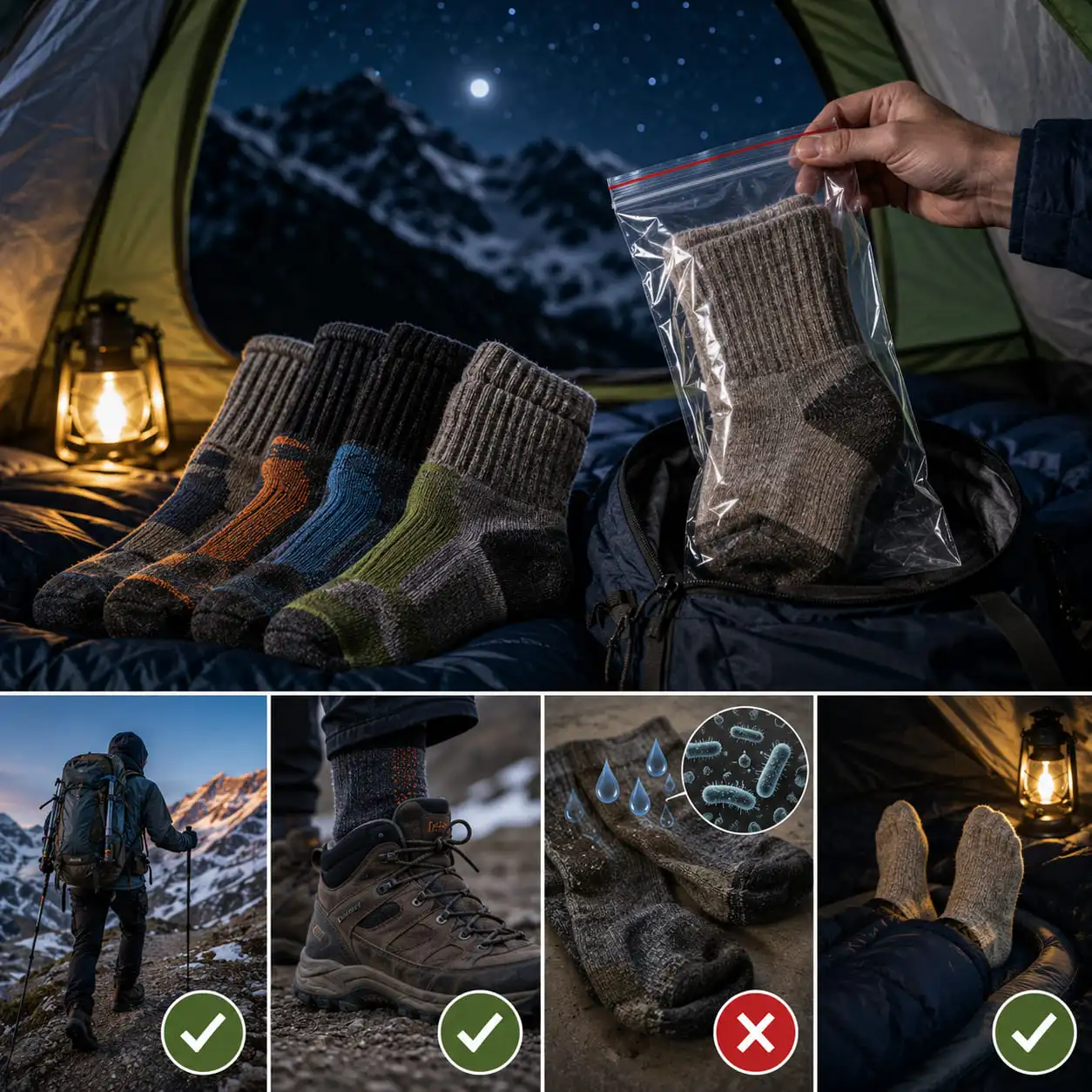
The Night-Sleep Sock Strategy: Always pack 3 to 4 pairs of synthetic hiking socks for the daytime trail, but keep one pair of thick, pure wool socks strictly sealed inside a plastic bag in your rucksack. This pair is only for sleeping inside your tent. Never wear your daytime trail socks to sleep—even if they feel dry, they contain microscopic sweat moisture that will turn ice-cold during the night.
Electronics, Hydration, and Health in Sub-Zero Conditions
When preparing for kedarnath in winter, it is easy to obsess over jackets and boots while completely forgetting how extreme cold alters the physical properties of everyday items.
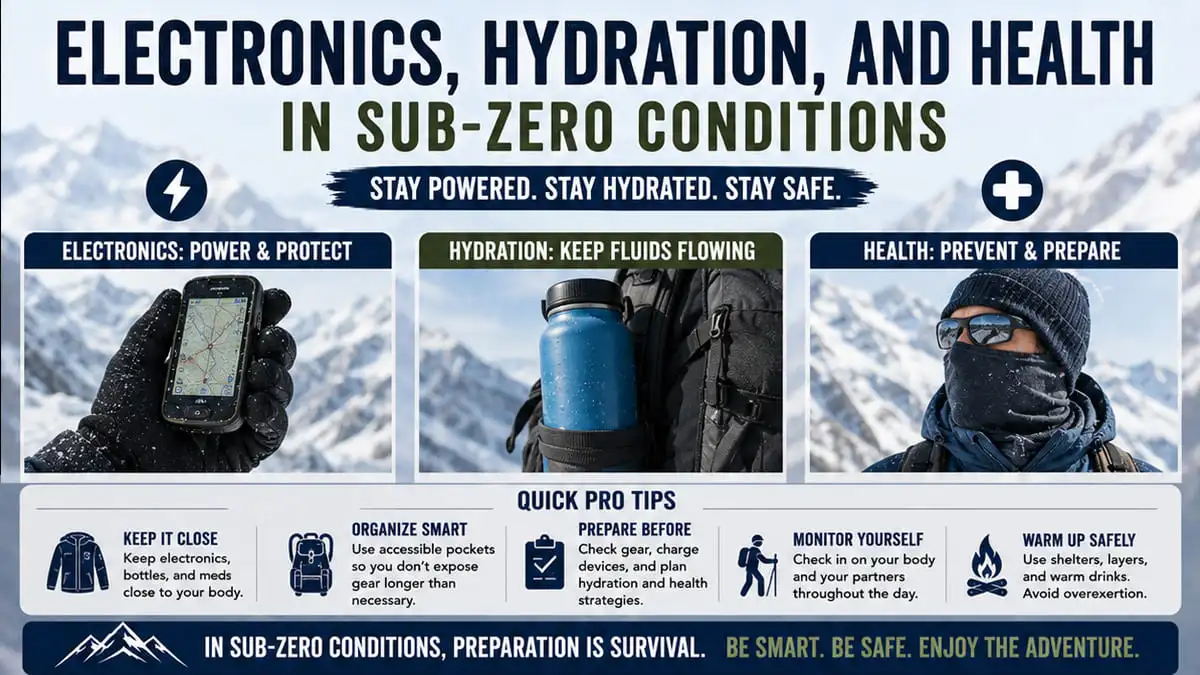
At sub-zero temperatures, water freezes solid, lithium-ion batteries fail within minutes, and small physiological issues can quickly spiral.
Managing these three non-clothing categories is just as vital to a successful summit as a heavy down jacket.
Managing Tech & Batteries in the Cold
Sub-zero temperatures drastically slow down the chemical reactions inside lithium-ion batteries.
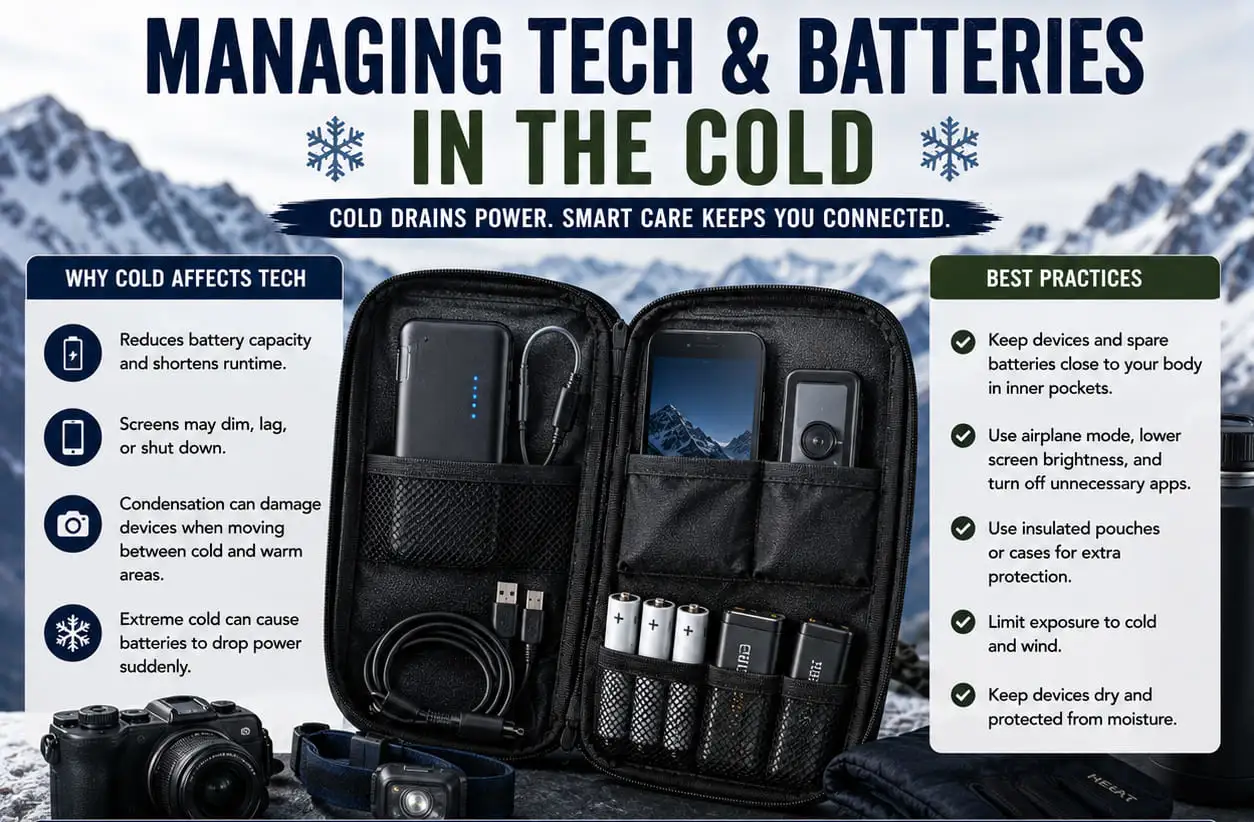
You might start a morning hike with a 100% camera or smartphone battery, only to watch it plunge to 15% within twenty minutes of exposure to the freezing alpine air.
- The Power Bank Rule: Carry a high-capacity (10,000 mAh to 20,000 mAh) power bank, and ensure it is fully charged before leaving the base town of Sankri, as there is no electricity on the trail.
- The Sleeping Bag Trick: Never leave your phone, camera batteries, or power bank loose inside your tent at night. Store them in a lightweight dry bag and sleep with them tucked at the bottom of your sleeping bag. Your body heat will preserve their charge. During the day, keep your smartphone in an inside zippered pocket close to your chest rather than in your daypack’s outer pockets.
“It sounds funny until you have to do it, but yes, you will literally be sleeping with your phone, camera batteries, and power bank at the bottom of your sleeping bag. The first night I forgot to do this, my phone battery mysteriously drained from 80% to dead silent by 5:00 AM just from the ambient tent cold.”
Hydration Metrics: Ditch the Plastic Bottle
Staying hydrated is your single best defense against Acute Mountain Sickness (AMS), as your body works twice as hard to breathe in thin, dry air. However, standard plastic water bottles or hydration bladders are useless on a winter trek.
⚠️ Trek Leader Tip: Altitude sickness at $12,500\text{ ft}is entirely preventable if you follow the right protocols. Download our offline High-Altitude Safety & AMS Tracker to keep the essential “Do’s and Don’ts” safety chart right on your phone for quick reference when you lose mobile network coverage[cite: 4, 5].
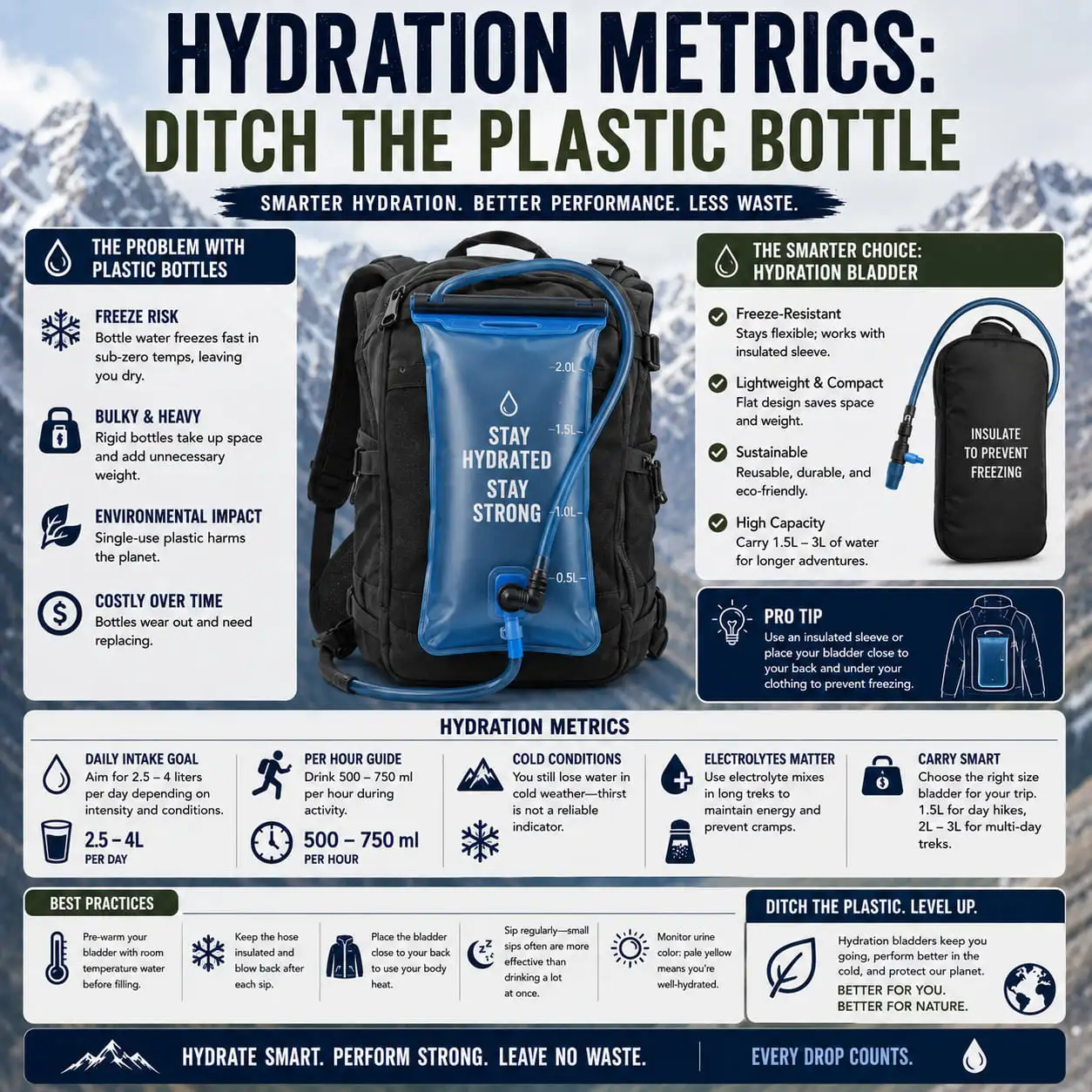
The water inside standard bottles will quickly turn into solid ice, and the water inside a hydration pack’s long rubber tube will freeze instantly, rendering the straw useless.
- The Flask Requirement: You must carry a 1-liter insulated steel thermos flask. Fill it with boiling water at the campsite every morning. It keeps your water warm enough to drink throughout the day, preventing throat irritation from freezing liquids.
- Keep It Upside Down: If you do carry a secondary, heavy-duty plastic bottle (like a Nalgene), store it upside down inside your daypack. Water freezes from the top down; storing it inverted ensures that if ice forms, it does so at the base of the bottle, allowing you to still unscrew the cap and drink.
High-Altitude First Aid & Toiletries
The combination of sub-zero windchill and high-intensity exercise requires specific, proactive self-care.
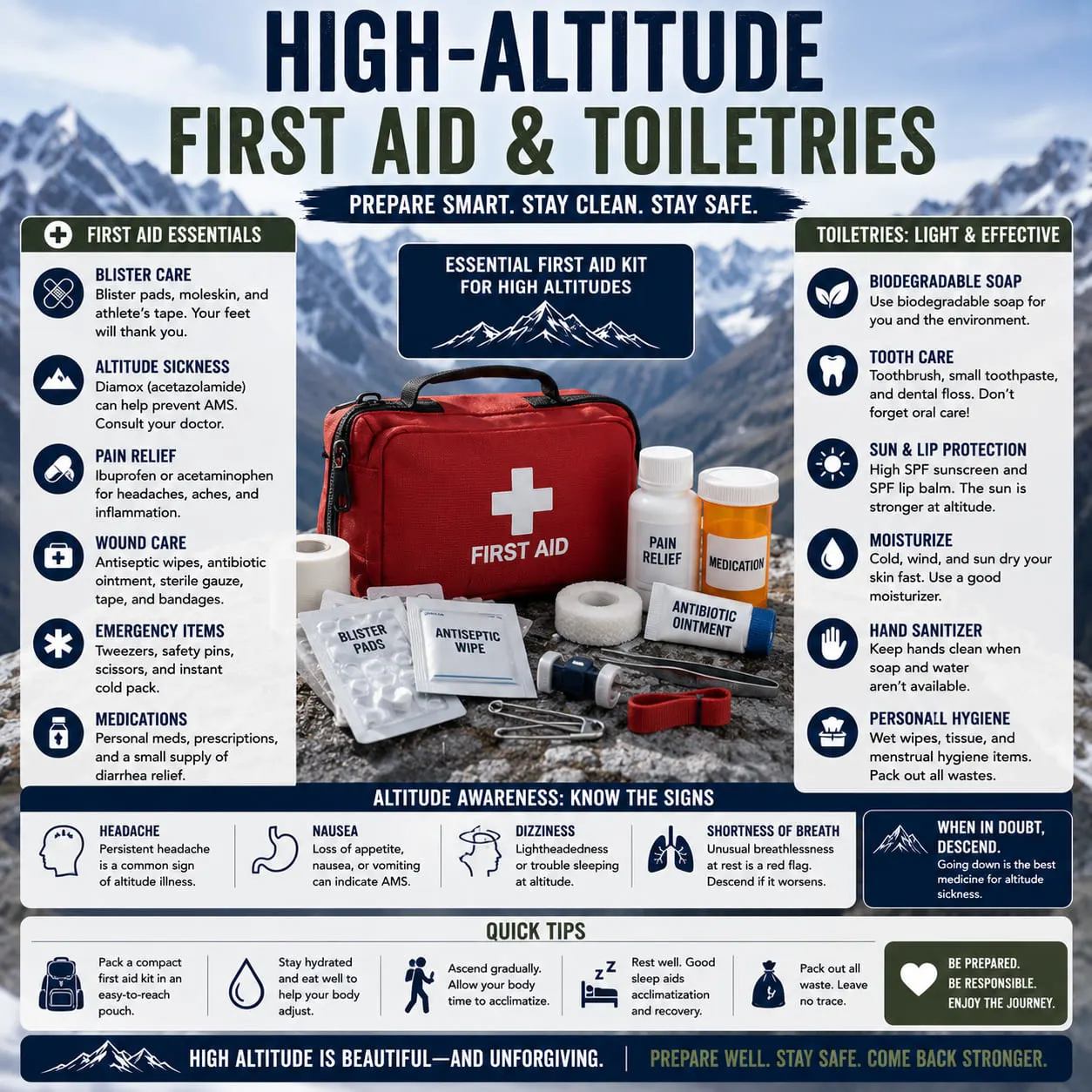
- Sun and Wind Protection: The mountain sun at $12,000\text{ ft}$ is intense, and snow reflection doubles the UV exposure. Pack a broad-spectrum, high-SPF ($50+$) sunscreen and a heavy-duty petroleum-based lip balm. Cold, dry mountain air will chap your lips and split your skin overnight if left unprotected.
- Essential Medication: Pack personal medications alongside basic mountain safety drugs like Diamox (for altitude acclimatization, used under medical consultation), pain relievers, and ORS (Oral Rehydration Salts) packets to replenish electrolytes.
- The Wet Wipe Warning: If you bring wet wipes for personal hygiene, keep them inside your inner jacket pockets during the day or down in your sleeping bag at night. Left in a backpack pocket, they will freeze into solid, unusable blocks of ice.
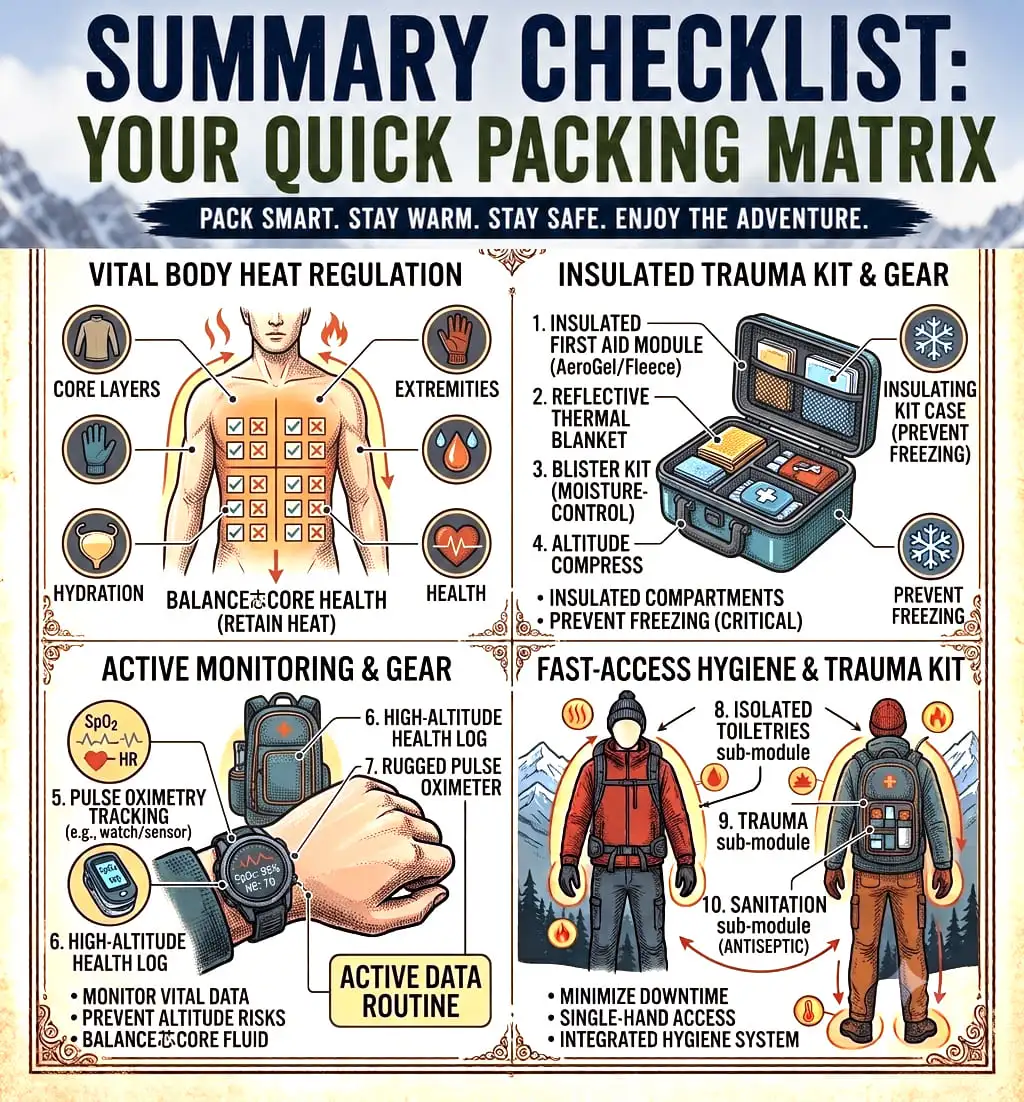
Summary Checklist: Your Quick Packing Matrix
To help you visualize exactly how much gear to pack without overloading your system, use this quick-reference matrix for a standard 5-day Kedarnath winter itinerary.
🖨️ Packing at home? Don’t lose track of your gear. [Click here to download our free, printable 1-Page Kedarnath Packing Checklist PDF] so you can check off items as they go into your bag!
Remember, items marked for the Daypack must stay on your back at all times during the trek, while Mule Bag items can be packed away in your primary duffel or rucksack.
| 1. ESSENTIAL BACKPACKS & LUGGAGE | ||||
| ☑ | ITEM NAME | QTY | MULE VS. DAYPACK | MY NOTES / PACKING STATUS |
| ☐ | Main Backpack / Duffel Bag | 1 Pc | MULE BAG | 50L–60L capacity. Carried by mules/ porters to campsites. |
| ☐ | Technical Daypack | 1 Pc | DAYPACK | 20L–30L with padded shoulder straps, hip belt, and rain cover. |
| 2. CLOTHING & LAYERING SYSTEM | ||||
| ☑ | ITEM NAME | QTY | MULE VS. DAYPACK | MY NOTES / PACKING STATUS |
| ☐ | Synthetic / Merino Thermals Best Men’s Thermals Best Women’s Thermals | 2 Pairs | MULE BAG | Keep 1 fresh pair exclusively forsleeping. |
| ☐ | Breathable Fleece Jacket Best Men’s Fleece Jacket Best Women’s Fleece Jacket | 1 Pc | WORN / DAYPACK | 200-300 GSM; perfect mid-layer active insulation. |
| ☐ | Heavy Technical Down Jacket Best Men’s Down Jacket Best Women’s Down Jacket | 1 Pc | DAYPACK | Sub-zero rated with a windproof exterior shell. |
| ☐ | Trek Pants (Nylon/Polyester) Best Men’s Trek Pants Best Women’s Trek Pants | 2 Pairs | WORN / MULE | Quick-dry & water-resistant.Strenuously avoid cotton. |
| ☐ | Waterproof Rain Poncho | 1 Pc | DAYPACK | Must comfortably overlay both youand your daypack. |
| 3. FOOTWEAR & EXTREMITIES | ||||
| ☑ | ITEM NAME | QTY | MULE VS. DAYPACK | MY NOTES / PACKING STATUS |
| ☐ | Waterproof High-Ankle Boots Best Men’s Boots Best Women’s Boots | 1 Pairs | WORN | Deep rubber lugs. Fully broken-in prior to trek. |
| ☐ | Synthetic Hiking Socks Best Men’s Hiking Socks Best Women’s Hiking Socks | 3-4 Prs | MULE BAG | Thick, moisture-wicking material to limit blisters. |
| ☐ | Thick Woolen Sleeping Socks Best Men’s Sleeping Socks Best Women’s Sleeping Socks | 1 Prs | MULE BAG | Keep sealed & dry; wear only inside your tent. |
| ☐ | Double Gloves (Liner + Ski) Best Men’s Double Gloves Best Women’s Double Gloves | 2 Prs | DAYPACK | 1 thin touch-screen pair + 1 heavy waterproof outer. |
| ☐ | Fleece Beanie / Balaclava Best Men’s Balaclava Best Women’s Balaclava | 1-2 Pcs | DAYPACK | Must fully protect ears and neck against high wind. |
| ☐ | UV-400 Rated Sunglasses Best Men’s UV-400 Rated Sunglasses Best Women’s UV-400 Rated Sunglasses | 1-2 Pcs | DAYPACK | Category 3 or 4 protection to prevent snow blindness. |
| 4. ESSENTIAL ELECTRONICS & GEAR | ||||
| ☑ | ITEM NAME | QTY | MULE VS. DAYPACK | MY NOTES / PACKING STATUS |
| ☐ | 1L Insulated Steel Thermos | 1 Pc | DAYPACK | Crucial for keeping drinking water from freezing solid. |
| ☐ | LED Headlamp (with extra batteries) | 1 Pc | DAYPACK | Mandatory for the 3:00 AM dark summit push. |
| ☐ | 10,000+ mAh Heavy Duty Power Bank Boat Energyshroom PB400 Ambrane 20000mAh Powerbank | 1 Pc | DAYPACK | Keep in your sleeping bag at night to protect the charge. |
| 5. PERSONAL MEDS & SANITATION | ||||
| ☑ | ITEM NAME | QTY | MULE VS. DAYPACK | MY NOTES / PACKING STATUS |
| ☐ | Personal Medical Kit (Diamox, etc.) | 1 Kit | DAYPACK | Include blister bands, rehydration salts, and personal meds. |
| ☐ | Moist Towelettes, Hand Sanitizer, Cold Cream, High-SPF 50+ Sunscreen & Lip Balm | 1 Pack | DAYPACK | Water is freezing at camp; essential for camp hygiene. |
Pack Smart, Climb Safely
At its core, successfully summiting kedarnath in the dead of winter isn’t a test of sheer physical endurance—it is a test of preparation. The sub-zero temperatures and icy ridges of the Garhwal Himalayas respect only one thing: the right gear handled with the right strategy.
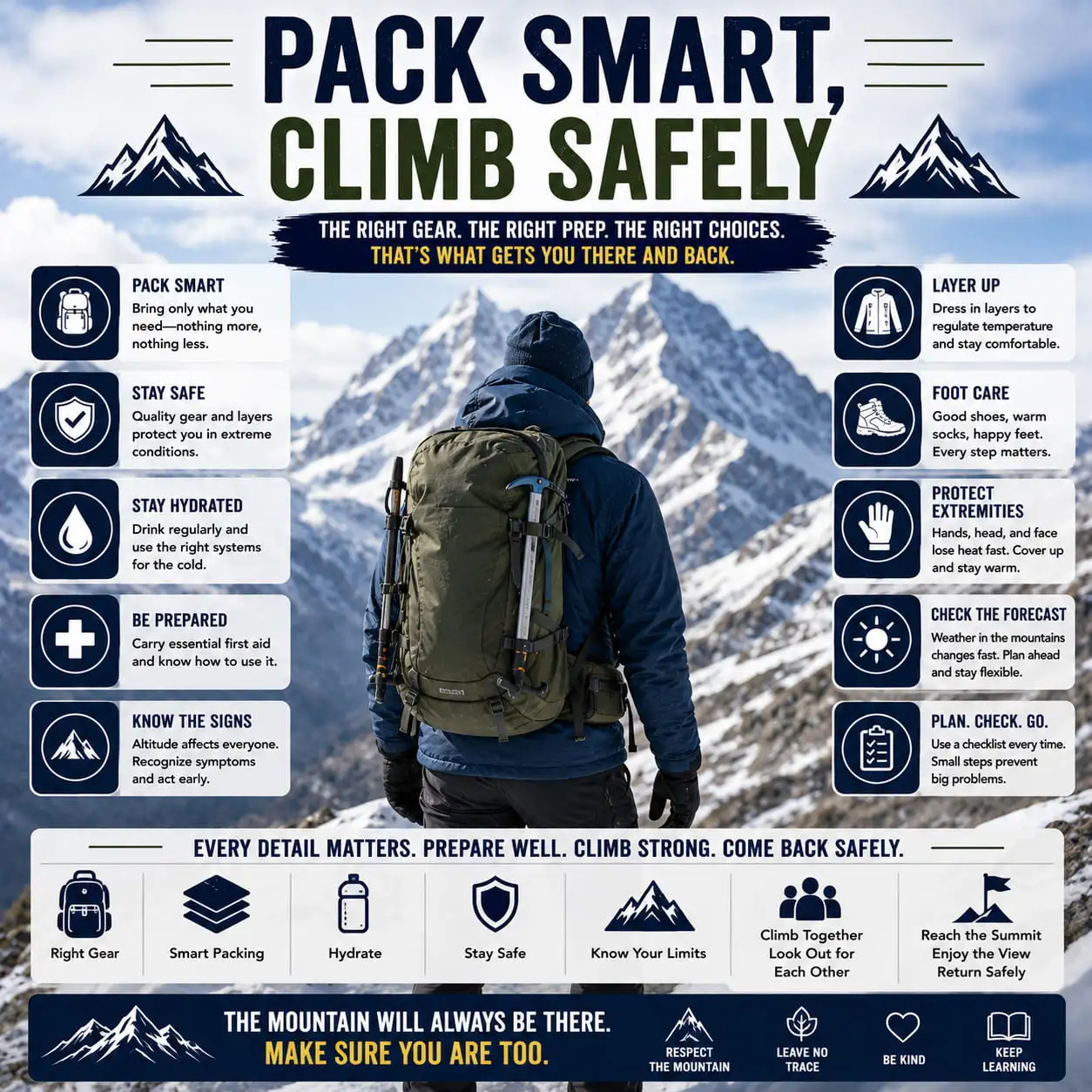
By mastering the technical three-layer system, you ensure your body remains a self-regulating furnace, dry and insulated against the harshest elements. By embracing the 30L daypack strategy, you smartly let the mules handle the heavy lifting while keeping your immediate survival tools—your layers, your hot water, and your emergency gear—right where they belong: securely on your back.
When you are standing at 12,500 feet, watching the sunrise paint the peaks of Swargarohini, Black Peak, and Bandarpoonch in shades of gold and pink, the last thing you want to think about is a frozen thumb or a dead camera battery. Take the time to audit your gear before you leave for Sankri. Pack with intention, respect the mountain’s volatile climate, and step onto the snow with absolute confidence.
The summit is waiting—make sure you’re packed for it.